Archie
Leave the World BehindArchie is Amanda and Clay’s fifteen-year-old son, Rose’s older brother, and a teenager negotiating the distance between childhood and the adulthood he imagines himself approaching. His early scenes place ordinary adolescent concerns—appearance, independence, and his sister’s opinion—alongside the family’s practical routines. When the crisis reaches the household, those familiar details give way to his sudden illness. The people around him can tend to his body and bring him indoors, but they cannot explain what is happening or promise that their care will be enough.
Identity and Background
Archie is fifteen. His appearance and habits are observed through the details of adolescence: he wears oversized, misshapen sneakers, uses a commercially designed underarm spray, and pays attention to the image he presents. During a stop at the Washingtons’ home, he lingers in front of a mirror wearing a lacrosse shirt whose sleeves he has cut away to show his muscles. He is pleased with what he sees. The episode makes his investment in looking older visible without making it exceptional; it belongs to the ordinary self-consciousness of a boy testing how he appears to others.
On the drive to the countryside, Archie looks at his phone while Rose looks at hers. Both have games and social media approved by their parents. Archie is texting a friend, while Rose has already posted several photographs from the trip, though the family has only just crossed the county line. Their separate screens register how readily each child occupies a private social world even while traveling together. Archie’s phone and lacrosse shirt mark a life organized around peers and adolescent identity, but the scenes do not detach him from family: he remains part of the shared journey and its small practical requests.
Adolescence and Family Life
At the Washingtons’ house, Clay asks Archie to carry a bag as the family gathers belongings. Archie does not immediately move; he is in the bathroom looking at himself in the mirror. Clay calls for him to hurry, and his irritation is described as part of the relaxation the adults are trying to sustain. The exchange is minor, but it establishes a familiar tension between a parent’s need to get things done and a teenager’s attention to himself. Archie is not simply a passive child in the household: he has his own priorities, while still being expected to help with shared tasks.
The contrast between Archie and Rose is especially clear around the pool. Ruth tells the children that more floats are in the garage, and they return with small, sagging inflatables. Archie manages to inflate his doughnut-shaped float; Rose cannot get air into her round raft. She sees his greater physical capability as an unfair advantage, since he is three years older, and regards him as almost grown while she remains a child in comparison. Amanda helps Rose inflate the raft. The scene presents the siblings’ age difference not as an abstract fact but as a small, immediate imbalance in what each can do.
Their connection is not defined only by irritation. When the children tire of the adults and the leisure around them, Archie and Rose rediscover a kind of cooperation that recalls their much younger selves. They leave the pool and move into the grass and shade together. Rose proposes going into the woods because she has seen deer. Archie dismisses the sighting as unremarkable, but he accompanies her. As they explore, he responds to her hesitation at a weathered door by urging her to open it. His thoughts briefly reduce her to a familiar stereotype of weakness, yet he recognizes that she is his little sister; his conduct remains bound to that relationship even when his inward response is impatient. The exploratory game is shared: Rose has to summon courage, and Archie is there with her as they discover that the small structure is empty.
The Noise and the Search for Safety
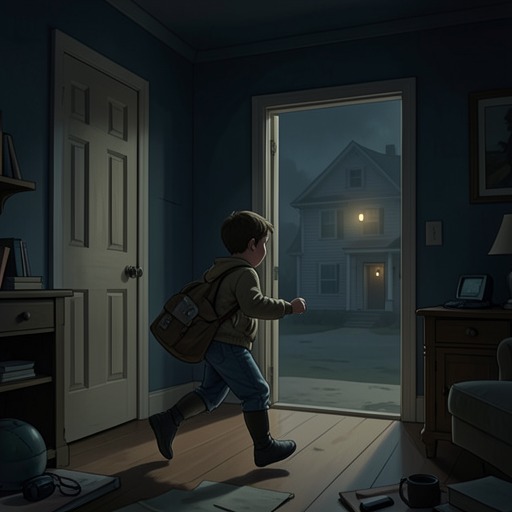
The sudden noise interrupts the children’s excursion and sends Archie, Rose, and Amanda running. Their paths happen to converge, and the children emerge from the woods to a reunion marked by relief. Ruth puts an arm around Archie’s bare shoulders. The adults and children are not yet a settled family unit with the Washingtons, but in the immediate aftermath of the sound their need for one another overrides that distance. The sky remains blue, yet the outdoors no longer feels trustworthy, and the noise leaves a lingering sense of vibration. Archie’s safety is therefore both physical and relational: he has returned to the adults, but the event has made the familiar surroundings feel uncertain.
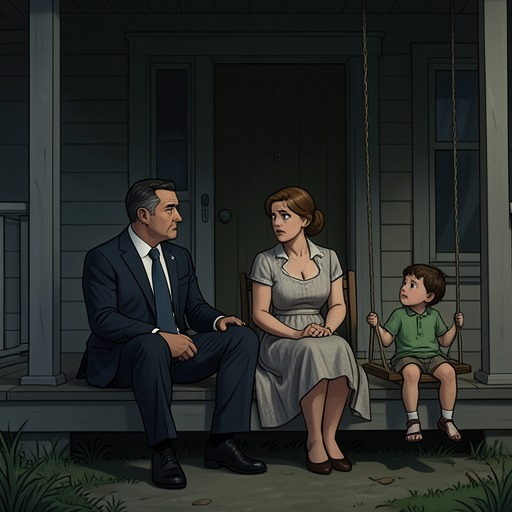
His first question after the reunion is for his father. The trauma of the noise is reflected in the break in his voice as he asks where Clay is. Amanda answers tersely that Clay has run an errand, while Ruth reassures the children that he will be back soon and gives them water. Archie’s question shows how sharply his attention turns toward his father when he is frightened. It also exposes the limits of what the adults can offer: Ruth can put an arm around him and provide a drink, but Clay is absent, and no one can yet explain the noise.
Illness and Care
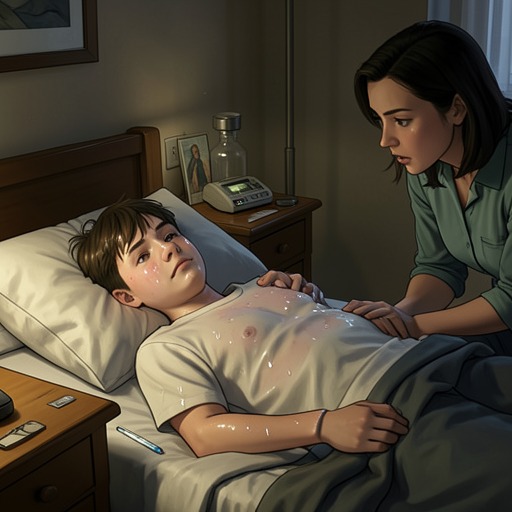
Later, Archie wakes disoriented and unable to account for what is happening. He vomits, and Amanda responds by calling Clay and tending to him. Her response is framed as parental upkeep: a frightening situation does not suspend the basic work of caring for her son. She washes him as she did when he was younger. Archie’s illness alters the parent-child balance in an instant. The boy who had been concerned with displaying his growing muscles is again dependent on an adult to clean and care for him.
The family had previously worried over the expensive epinephrine autoinjector kept for Archie, treating its presence as an important safeguard. Amanda now thinks of that vigilance against one possible danger alongside his unexplained condition after the noise. The text does not establish that the noise caused his illness, nor does it offer a diagnosis. What it makes clear is the insufficiency of even careful preparation: parents can anticipate a known risk and still face a crisis whose nature they do not understand.
As the illness continues, Archie loses a tooth without an apparent explanation. Amanda initially mistakes what she sees for vomiting, then recognizes that something else is happening. Archie is confused and calls to her. Later, after Clay is present, Archie vomits again; G. H. demands an explanation and tries to reassure him. Ruth sees the episode from the deck and hurries to help. She and the others brace Archie between them and walk him toward the house at a deliberate pace. His eyes flutter, and the adults cannot know what he perceives. Their practical response is to get him inside, not to claim that they understand the cause.
Narrative Role and Ending
Archie’s trajectory binds the book’s domestic details to its larger emergency. The trip, phones, sports shirt, pool floats, and sibling excursion establish a recognizable family life; the noise then exposes how little those ordinary arrangements can guarantee. His illness sharpens that reversal. The family had worried about a specific medical contingency, but now faces unexplained symptoms and a loss that their available precautions do not address. The importance of the episode lies not in a confirmed diagnosis—the evidence supplies none—but in the difference between knowing how to perform care and knowing what is wrong.
His relationships remain visible through action. Rose’s companionship draws him out of the adults’ company; even his impatience with her coexists with his participation in their exploration. His concern after the noise turns toward Clay, while Amanda, Clay, Ruth, and G. H. each take part in helping him once he is sick. At the last point shown, they have managed to bring Archie indoors, and Ruth is mentally inventorying supplies, from old antibiotics and a hot-water bottle to basic household provisions and emergency cash. The scene ends with care underway but the underlying danger unresolved: Archie is surrounded by adults trying to help, and they still do not know what will help him.